Microsoft 365 outage knocks out Outlook, Teams and Copilot
Scope of the disruption
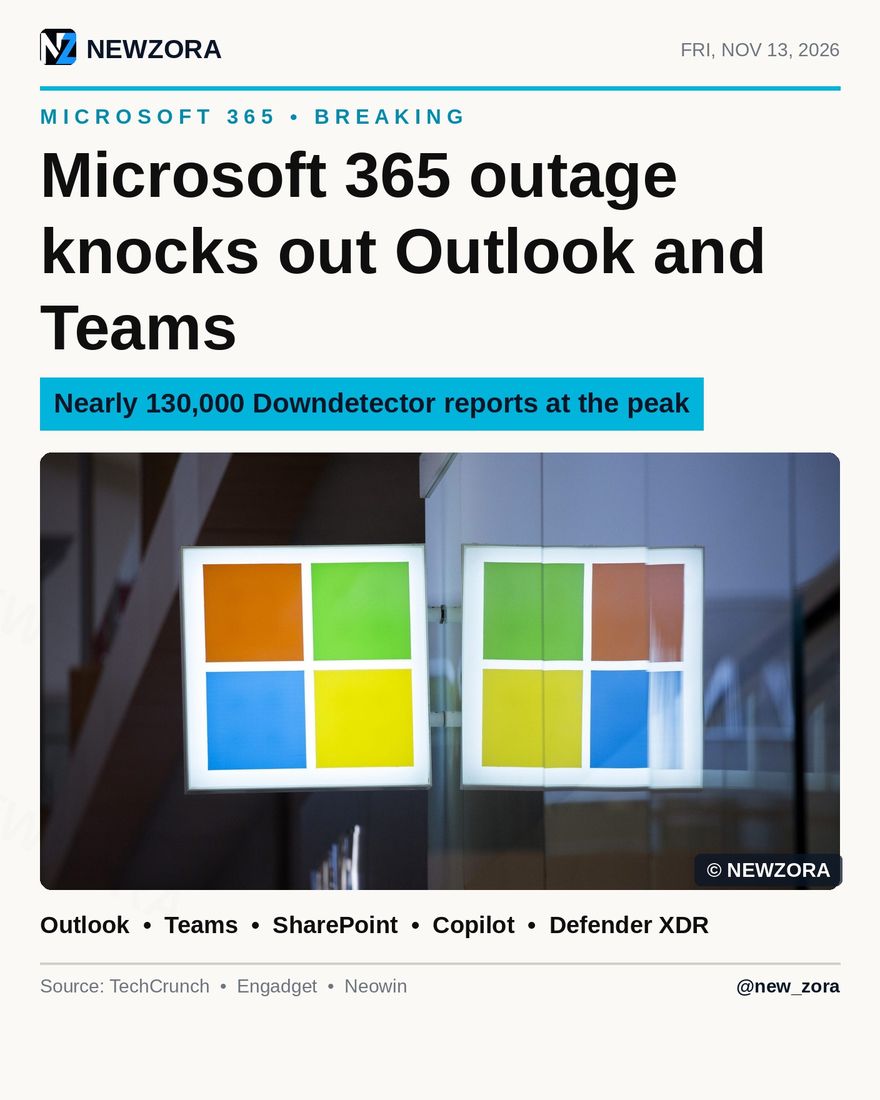
The disruption covered the core of Microsoft's productivity suite. According to reporting by TechCrunch, published at 11:03 AM Pacific Time on November 12, and by Engadget, published at 19:17 UTC the same day, the affected services included Exchange Online, Outlook, Microsoft Teams, SharePoint Online, Microsoft Copilot 365, and Microsoft Defender XDR. Consumers also reported that OneDrive and Office for the web were inaccessible. The breadth of the affected services indicates that the fault lay in shared infrastructure rather than in a single application, although Microsoft had not confirmed a root cause at the time of the last update.
Two separate incidents
Microsoft recorded two distinct incidents on the same day, and the two must not be conflated. The first, identified by Microsoft as TM1550488, affected Microsoft Teams only and was confined to North America. It occurred earlier in the day. The second, identified as EX1550543, was the broader incident affecting Exchange Online and the wider set of Microsoft 365 services across the Americas. The reporting in this article concerns the broader incident, EX1550543. The existence of two incidents on the same day complicates any assessment of the overall impact, since reports filed during the earlier Teams incident may overlap with reports filed during the broader outage.
Scale of the reports
The scale of the disruption is most clearly visible in the volume of reports submitted to Downdetector, a service that collects user-submitted outage reports. Reports concerning Outlook peaked at 128,874 at 1:09 p.m. Eastern Time, and had fallen to 92,914 by 1:50 p.m. Eastern Time. Reports concerning Microsoft 365 peaked at more than 46,000 to 47,000. Some tallies cited figures above 130,000 for Outlook reports; the difference between that figure and the 128,874 peak reflects different tallies recorded at different times rather than a contradiction. Downdetector figures count submitted reports, not affected accounts, and a single affected organisation may generate many reports. The figures therefore establish the scale of public reporting rather than the number of affected accounts.
What Microsoft has said
Microsoft attributed the disruption, in its public status communications, to infrastructure experiencing elevated load, and stated that a large number of servers were unexpectedly unavailable. The company did not explain why those servers became unavailable. No confirmed root cause had been disclosed at the time of the last update. No party has attributed the disruption to a cyberattack, and this article makes no such suggestion. The absence of a confirmed cause means that any statement about the underlying fault would be speculative, and Microsoft has not provided one.
Status at last update
At the last update, approximately 00:40 Dhaka time on November 13, the outage had not been resolved. Microsoft stated that it was still working to reduce the impact of the incident. Reports submitted to Downdetector were declining from their peak, which indicates that access was returning for at least some of those affected, but Microsoft gave no time by which full restoration would be complete. This article therefore describes the incident as ongoing at last update, with reports declining, and does not describe it as fixed or restored.
Background
The November 12 disruption follows an earlier major incident in September 2026, when Microsoft experienced a days-long outage that the company blamed on a core authentication configuration issue. That earlier incident is relevant background only. It does not establish the cause of the November 12 disruption, which Microsoft has described in different terms, and the two incidents should not be treated as having a common cause on the evidence available.
Why it matters
Microsoft 365 is the productivity platform for a large share of corporate and institutional work, and an interruption to Exchange Online, Outlook, and Teams removes email, calendaring, messaging, and meetings simultaneously. The inclusion of Microsoft Copilot 365 and Microsoft Defender XDR in the affected services extends the impact beyond communication into artificial intelligence assistance and security operations. For organisations that depend on the suite for daily operations, the disruption therefore represented a loss of several core tools at once rather than the failure of a single application. The concentration of so many services in one platform means that a single infrastructure fault can produce a wide operational impact.
What comes next
The immediate question is the timing and completeness of restoration. Microsoft has not given a restoration time, and the decline in Downdetector reports provides only an indirect indication of recovery. A further question concerns the cause: Microsoft has said that a large number of servers became unexpectedly unavailable, but has not explained why, and a fuller account may follow once the incident is resolved. Until Microsoft publishes that account, the cause remains unconfirmed. This article will be updated as Microsoft provides further information.
Sources: TechCrunch, November 12, 2026; Engadget, November 12, 2026; Neowin; Microsoft 365 service status communications; Downdetector.